❀ The Complete Northeast Homeowner Guide ❀
How To Install Sod, From First Pallet To Finished Lawn
Honest guidance on whether to DIY or hire a pro — plus the exact step-by-step process our crews use across CT, NY, MA, NJ, RI, VT, NH & ME.
From The Field
Real installations. Real homeowners. Real lawns across the Northeast.
Installing a new sod lawn is one of the fastest ways to transform a property. Unlike seed — months of patience and careful care — sod delivers an instant mature lawn, green, dense, and usable within weeks.
But behind that instant transformation is a real process with real decisions. The one that matters most for most homeowners is the first: do you install it yourself, or hire it out? This guide answers that honestly, then gives you what you need to succeed either way.
DIY vs. Hire a Pro
Most homeowners landing here are trying to answer one question. The answer depends on four factors — being honest about each saves you from the most common mistake: starting a DIY project and either giving up halfway or finishing with a lawn that underperforms for years.
DIY Makes Sense When…
- →The area is under ~1,000 sq ft
- →You have prior heavy yard work experience
- →You own (or can rent) sod cutters, rototillers, lawn rollers
- →You can dedicate a full weekend with the right weather
- →You have help carrying and laying heavy pieces
- →You can water 2–4 times daily for the first two weeks
Hire It Out When…
- →The area is larger than ~1,000–2,000 sq ft
- →You don't own the equipment
- →A full weekend of hard labor isn't realistic
- →You want it done correctly the first time
- →Your schedule doesn't allow an uninterrupted install window
- →You're already investing in sod and don't want install errors to compromise the outcome
The Honest Reality
A typical 5,000 sq ft DIY install involves roughly 9–10 pallets of sod, each weighing 750 to 2,000 lbs. That's a physically demanding, multi-day project. Factor in equipment rental, topsoil, helpers, and the value of your own weekend — full-service installation often costs less than people assume, while delivering dramatically better results.
We're not pushing every homeowner toward full installation. Small projects, experienced DIYers, and homeowners who genuinely enjoy the work do great installations all the time. But if you're on the fence, get a quote before committing to a project that may end up costing more in time, back pain, and rework than the pro option would have.
What CT Sod Delivers
Three service tiers, sized to fit any project across the Northeast.
Sod Delivery Only
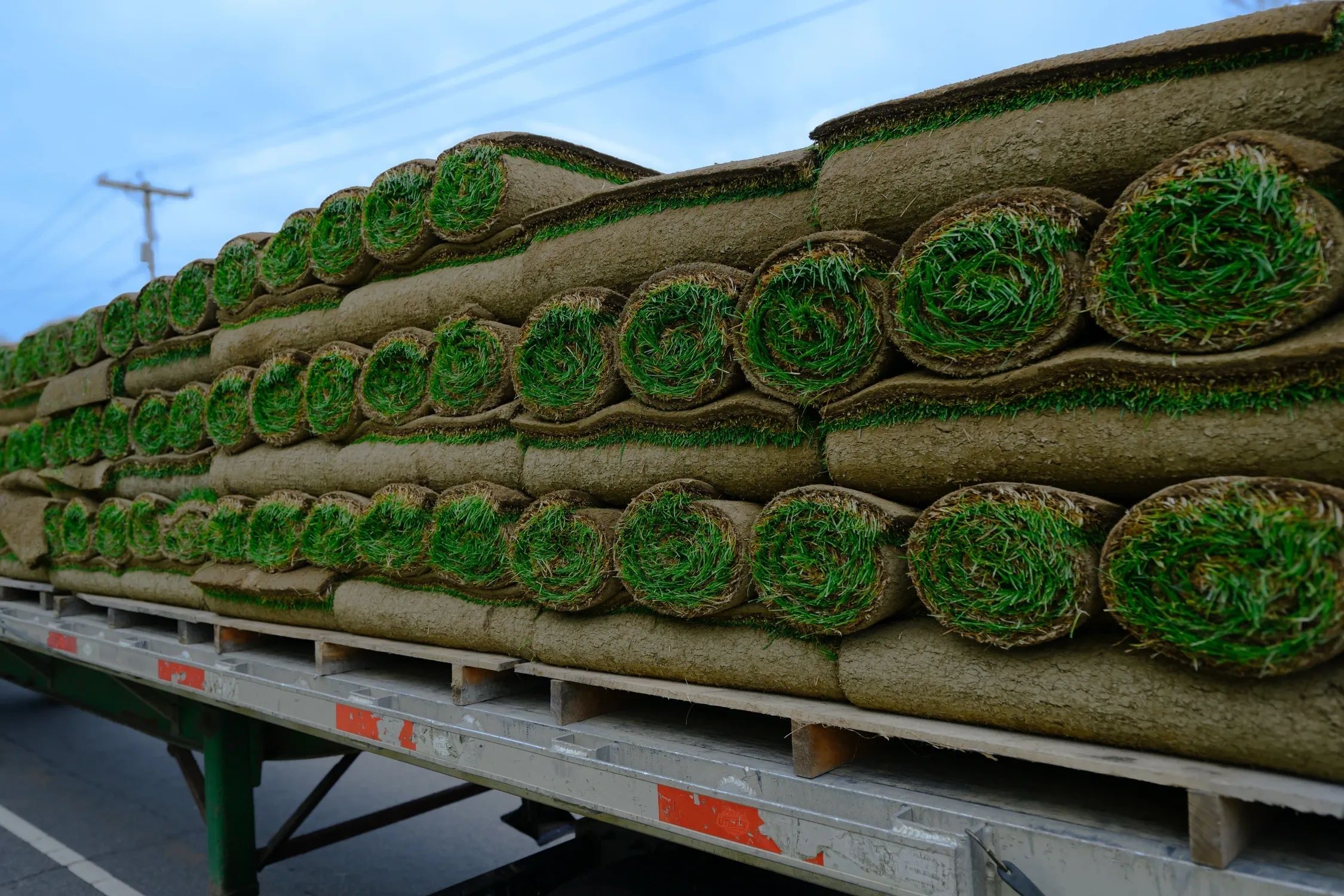
Fresh, farm-cut sod delivered on pallets, ready for you to install. Right for experienced DIYers, landscape contractors buying wholesale, and homeowners who want the savings of self-install and are prepared for the work.
See sod pallet delivery logistics →Delivery + Site Preparation
We deliver the sod and prep your site — spraying and removing existing grass, grading, bringing in fresh topsoil if needed, leaving you with a ready-to-install surface. You handle the laying. Our most practical middle-ground service.
Full-Service InstallationMost Popular
We handle everything: old lawn removal, grading, topsoil, sod delivery, laying, rolling, and initial watering. You get a finished lawn without touching a shovel. Most popular for homeowners who want the result without the work — and the option that delivers the best long-term outcomes.
Pricing varies based on project size, site conditions, and prep level. Most homeowners are surprised by how affordable full installation turns out to be once they factor in the true cost of DIY — pallet delivery, equipment rental, topsoil, helpers, and a weekend of their own time. Request a free quote for straight numbers on your project.
The Complete Installation Process
Whether you install it yourself or watch us do it, here's exactly what happens from decision to finished lawn.
Site Assessment
Measure square footage, evaluate existing lawn and soil, identify shade vs. sun zones, check drainage, and confirm access for delivery.
Old Lawn Removal
Sod cutter or herbicide-and-rake approach. The new sod must sit on bare, prepared soil — never on top of existing turf.
Grading & Topsoil
Loosen the top 4–6 inches, add 2–3 inches of fresh topsoil for renovations, grade to a slight slope away from buildings, hand-rake debris-free.
Sod Selection & Delivery
Pick the right variety (see Sod Varieties below). Schedule delivery for a day you're ready to install immediately — sod sitting on a pallet through a summer weekend is not the same sod it was on Friday.
Lay the Sod
Start with a straight edge, stagger seams brickwork-style, press joints tight without overlaps, cut to fit with a sharp utility knife, then roll lightly with a water-filled lawn roller for soil contact.
Water Immediately
Within 30 minutes of installation, saturate so soil is moist 4–6 inches deep. Don't wait until the whole yard is laid — water in sections as you go in warm weather.
DIY Pace
A capable adult can lay one pallet (500–600 sq ft) in 1–2 hours. A 5,000 sq ft lawn = 10–20 hours of labor, usually a full day or weekend with a helper.
Pro Pace
Our crews average considerably faster — team, equipment, and workflow are optimized for sod. A full-service install we'd schedule for a single day is often a two-day DIY project.
Sod Varieties
The Northeast is cool-season grass country. Three common variety families have meaningfully different strengths.
Kentucky Bluegrass
Dense, beautiful, fine-blade classic Northeast lawn. Requires full sun and regular watering.
Tall Fescue Blends
Deeper-rooting and more drought-tolerant. Handles some shade and inconsistent watering better than KBG.
90/10 Fescue/KBG
Tall fescue's deep roots with a small percentage of bluegrass for self-repair via rhizomes.
For a detailed breakdown of which variety fits your property, see Tall Fescue vs. Kentucky Bluegrass — Complete Comparison.
Watering & Aftercare
Water is the one variable that decides whether new sod survives. Within 30 minutes of installation, saturate so soil is moist 4–6 inches deep.
Daily watering, morning and late afternoon. Keep the sod and top inch of soil consistently moist — letting it dry out once kills establishment.
Transition to every other day, going deeper each time to encourage roots to chase moisture downward.
Deep watering 2–3 times per week, delivering 1–1.5 inches total per week. This progressive reduction is what trains roots to grow deep.
Shallow, frequent watering forever creates shallow-rooted lawns that struggle in drought. The progressive reduction above is non-negotiable. For the underground 12-month view, see how new sod roots — complete 12-month timeline.
Post-Installation Care
Mowing
Wait until grass reaches 3–4 inches, typically 2–3 weeks after install once the tug test passes. Mow at the highest setting; never remove more than one-third of the blade.
Fertilizing
Wait 30 days before first application. Sod arrives pre-fertilized — high-nitrogen too early creates weak, shallow roots.
Traffic
Minimize foot traffic for 3–4 weeks. Light walking is fine; sustained use should wait until the lawn is fully anchored.
Why Homeowners Choose CT Sod
Farm-fresh sod, cut to order
We don't sit on inventory. Your sod is cut fresh for your delivery window and installed the same day when possible — the way sod is supposed to be handled.
Experienced crews who do this every day
Sod installation is deceptively difficult. The technique, the pace, the watering timing, the soil contact — small errors compound into major problems weeks later. Our crews install hundreds of lawns per season.
Full-service coverage across 8 Northeast states
Fairfield County, New Haven, Hartford, Boston metro, Worcester, Westchester, Long Island, the Hamptons, New Jersey, Rhode Island, southern Maine, New Hampshire, and Vermont. If you're in the Northeast, we deliver and install.
Honest guidance, not just sales
We'll tell you when DIY makes more sense. We'll recommend the variety that fits your property, not the one with the highest margin. The goal is a lawn that performs for years — satisfied customers become referrals.
The truth about your soil
A beautiful new lawn on biologically depleted soil underperforms for decades. We explain what we see, what prep makes sense, and what to expect — no sugarcoating. See soil biology and new sod.
Timing & Scheduling
Spring Peak (April – May)
Cool soil, frequent rainfall, strong rooting before summer heat. One of the two equal-peak install windows.
Fall Peak (September – October)
Warm soil, cool air, excellent root growth before winter. The other equal-peak window — lawn is well-established by the following spring.
June & November — Okay
Solid shoulder months around the peaks. Cool enough to root well without the watering load of high summer.
Summer (July & August) — Diligent Watering
Possible but requires significantly more water management. Best for buyers committed to the watering schedule.
December – February — Dormant Install
Sod can still go down as long as the ground isn't frozen, but the grass is fully dormant — it won't green up or root meaningfully until spring soil temperatures return. The lawn finishes establishing in spring.
Spring and fall calendars fill fast. Reach out before peak season locks up — most orders ship within 2–7 days, but the prime install dates go first.
Further Reading
Ready When You Are
Let's Build Your Lawn.
Free quotes, honest guidance, and farm-cut sod delivered across CT, NY, MA, NJ, RI, VT, NH & ME. Spring and fall calendars fill fast — reach out before peak season locks up.